

Home
  • About Us
    • Members
    • Leadership
    • Annual Report
  • Powering the Future
    • Our Energy Mix
  • Electrify and Save®
    • On-Bill Repayment
    • Programs
    • Trade Ally
  • Media
    • Resources
    • Blog
    • Features
    • News
    • Newsletter
    • Podcast
  • Cooperative Benefits
  • Operations
    • Wildfire
  • Search
Menu

Search form

Snow blizzard

Storm response illustrates the importance of planning, collaboration and resiliency

March 26, 2019

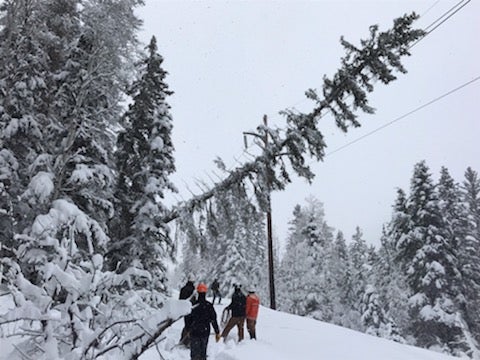
As soon as weather forecasts started predicting extreme weather for March 13, our teams in Energy Markets began anticipating potential impacts and making adjustments. We are the team tasked with ensuring sufficient power supply to meet our members’ needs, and knowing the storm could impact the availability of our transmission and generation resources, we took immediate steps to prepare. We made sure we had natural gas ready to fuel the generating stations we could quickly bring on-line as needed.
Blog-bombcylone-tree-032619.jpg

Impact felt across system

Throughout the course of the storm, numerous generation resources were impacted.

  • By 8 a.m., Tri-State had lost nearly half its wind resource capability due to a combination of high wind speed (as wind speeds exceed about 50-60 mph, depending on the specific site, wind turbines shut down to protect from damage) and icing conditions on the blades (which reduce the aerodynamic performance or can cause the turbine to shut down). The weather impacted our four wind resources spread from northeast to southeast Colorado.
  • By 4 p.m., Tri-State had lost more than 90 percent of its wind resource capability.
  • The associated cloud-cover also reduced our solar resource capability for the day by around 50 percent.

In addition, several other Tri-State resources were impacted due to transmission line outages.

  • A major line outage between Colorado and Wyoming forced the curtailment of the Laramie River Station.
  • Multiple line outages in Southeast Colorado caused the Limon Station to be unavailable and further curtailed several wind resources.

Most of these outages were resolved on March 14, but some were still active and causing generation resource curtailments until March 23.

Importance of reserve sharing

The storm highlighted the value of the regional reserve sharing group we’re a member of, the Rocky Mountain Reserve Sharing Group (other members include Xcel Energy, Colorado Springs Utilities, Black Hills Energy, Basin Electric, the Western Area Power Administration, Wyoming Municipal Power Agency, and Municipal Energy Agency of Nebraska).

Through a reserve sharing group, all members jointly replace the sudden loss of a generation resource within 15 minutes. This assistance is provided to the member who lost the resource for approximately one hour, giving that member time to replace its lost generation resource by bringing additional generation on-line or from electric energy purchases. Tri-State received assistance from the group twice and provided assistance to other members five times from during the course of the “bomb cyclone.”

Real-time response is critical

Real-time situational awareness is of utmost importance during extreme weather conditions. Resource Dispatch and Trading (one of the Energy Market teams) is responsible for the real-time response to what can be rapidly changing conditions and contingencies. As generation and transmission outages occurred, the real-time team re-dispatched our resources in response.

We also used the Generation Alert email blast to notify all Tri-State-operated plants that system conditions were deteriorating. The first Generation Alert sent was Level 2, notifying the plants that system conditions were serious and work activities were restricted to maintenance that would not jeopardize unit loading. The second Generation Alert was upgraded to Level 3, notifying the plants that system conditions were critical and all work activities must cease that had a remote chance of causing a plant to trip offline. The Generation Alert was downgraded on March 14 and totally lifted by 7:30 p.m. that day.

System stability bolstered by a diverse resource portfolio and resilient transmission system

The diversity of our generation resources—their location, technology and fuel source—allowed us to respond and make adjustments as the storm made its impact. That strength, bolstered by the resiliency of the transmission system, helped us limit the impact of this event on our delivery of power to our members.

Keeping the lights on is our mantra. Our teams are trained and tested and know how to make the quick decisions necessary to keep power flowing even during the most extreme of circumstances.

Stay tuned in to tour blog to hear about the work of our Transmission teams to respond to the storm.

Dan Walter, senior manager Energy Markets

Contributor:

Dan Walter, Senior Manager Energy Markets

Blog Posts

Energy Saving Maintenance Checklist for Small Businesses

Energy Saving Maintenance Checklist for Small Businesses

Even if you don’t own a small business, you likely know someone who does. They’re the lifeblood of our rural communities, from the neighborhood barber to the downtown coffee shop. Whether you’re the owner or a loyal patron, running a business is a lot of work. Small business owners do it all, and that often includes maintenance that can help reduce energy costs. Our Energy Saving Maintenance Checklist for Small Businesses is a good place to start if you're working on your list of to-dos.
Peter Rusin, Member Relations Manager
Read more >
The Benefits of Heat Pumps in Cold Climates

The Benefits of Heat Pumps in Cold Climates

Many people are still learning about the benefits of heat pumps and what they can do. Heat pumps are especially beneficial in cold weather climates. A heat pump is part of a home heating and cooling system and is installed outside the home. Here are five main types of heat pumps
Peter Rusin, Member Relations Manager
Read more >
How to Create an Energy-Efficient Laundry Room

How to Create an Energy-Efficient Laundry Room

No matter how big or small, every laundry room has the potential to use less energy. By increasing your laundry room's energy efficiency, you will see a lower bill and might be able to take advantage of rebates through your electric cooperative or public power district. Read on to learn more.
Lonnie Tucker, Relationship Manager
Read more >
Energy Saving Tips While You're Away on Vacation

Energy Saving Tips While You're Away on Vacation

There’s already a lot of prep work that goes into taking a trip. Between planning, finding a pet sitter and catching a flight on time, you don’t need more complications. So, keep it simple with these five easy steps before heading out the door.
Matt Fitzgibbon, Beneficial Electrification Manager
Read more >
Benefits of Installing an Attic Fan for Summer

Benefits of Installing an Attic Fan for Summer

If you're considering installing an attic fan but aren't sure if it would be a good fit for your house, here are a few points to consider about attic fans, how they function, and how installing one can improve the energy efficiency of your home.
Matt Fitzgibbon, Beneficial Electrification Manager
Read more >
How to Prepare Your Home for a Summer Heat Wave

How to Prepare Your Home for a Summer Heat Wave

During summer heat waves, air conditioning can be a real lifesaver.  Many homes in cooler climate states aren’t always equipped with air conditioning, so when an unexpected heat wave hits, many residents rely on other ways to stay cool without AC. No matter where you live, it’s important to be prepared for hot summer days with efficient cooling and a plan in place to stay comfortable.
Matt Fitzgibbon, Beneficial Electrification Manager
Read more >
Home Energy Efficient Tips for Spring

8 Home Energy Efficient Tips for Spring

Do you want to make your home more energy-efficient, but don't know where to start? Spring is the perfect time to buckle down on home improvement projects before the summer heatwaves begin. Here are some simple, affordable home improvements to tackle this spring to help you cool off and save energy.
Matt Fitzgibbon, Beneficial Electrification Manager
Read more >
Tips for a More Energy Efficient Home

11 Tips for a More Energy Efficient Home
Energy waste is one of the most common household expenses, and while energy companies are working to develop cleaner, more efficient solutions, there is still more that can be done when you make adjustments at home.
Matt Fitzgibbon, Beneficial Electrification Manager
Read more >
Best Ways to Prepare Your Home for a Power Outage

Best Ways to Prepare Your Home for a Power Outage

Power outages occur in every part of the country, sometimes during the coldest months of winter. While we recommend being prepared for a power outage, regardless of the cause, if the forecast calls for severe winds, heavy rains, snow or ice it is best to be ready. Here are some steps you can take.
Kent Mahanna, MPH, CSP Senior Manager Safety & Security
Read more >

Pagination

  • First page« First
  • Previous page‹ Previous
  • Page   1
  • Currently on page   2
  • Page   3
  • Page   4
  • Next pageNext ›
  • Last pageLast »

Subscribe

* indicates required
Join our mailing list for
updates and member news.


Quick links

  • Dark Fiber
  • Wildfire
  • Financials
  • Board Meetings
  • Member Tools
  • The Cooperative Difference
  • Privacy Policy
  • Terms and Conditions
  • Careers
  • Employee login

Tri-State Generation and Transmission Association
Office: 303-452-6111
1100 West 116th Avenue
Westminster, CO 80234

Mailing address:
PO Box 33695
Denver, CO 80233-0695

©2026 Tri-State Generation and Transmission Association, Inc. Power supplier to the rural west.

  • About Us
    • Members
    • Leadership
    • Annual Report
  • Powering the Future
    • Our Energy Mix
  • Electrify and Save®
    • On-Bill Repayment
    • Programs
    • Trade Ally
  • Media
    • Resources
    • Blog
    • Features
    • News
    • Newsletter
    • Podcast
  • Cooperative Benefits
  • Operations
    • Wildfire
  • Search