
Energy Efficient Heating Options for Rural Communities in the West
As winter approaches, rural communities in the West face the on-going challenge of keeping their homes warm while managing energy costs. With big temperature swings, it's helpful for families to explore energy-efficient heating options that suit this unique climate. Here’s our favorite tips to get the most out of your current heating system and what to consider if it is time to upgrade.
Assess Your Current Heating System
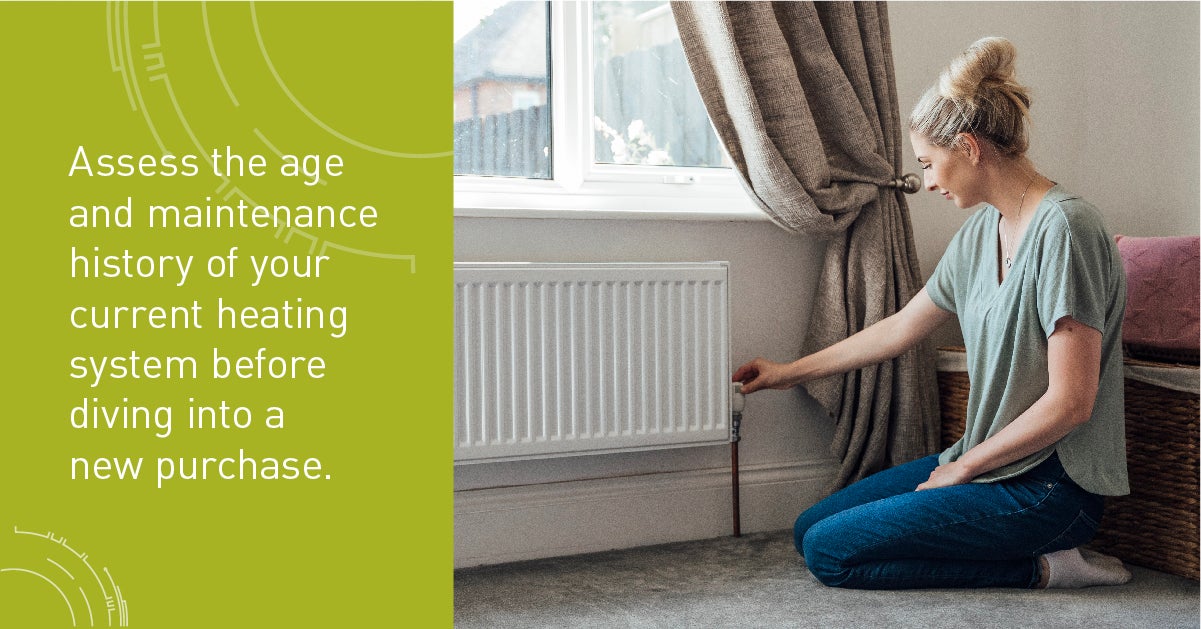
Before diving into new heating options, evaluate your existing system. Whether you have electric heaters, propane, wood stoves, or even a combination, understanding their efficiency will help you decide if it’s worth upgrading or optimizing.
Check for:
-
Age of the system: Older systems may not be as efficient
-
Energy bills: High costs might indicate inefficiencies
-
Maintenance history: Regular maintenance can significantly enhance performance
Upgrade to Energy-Efficient Heating Systems
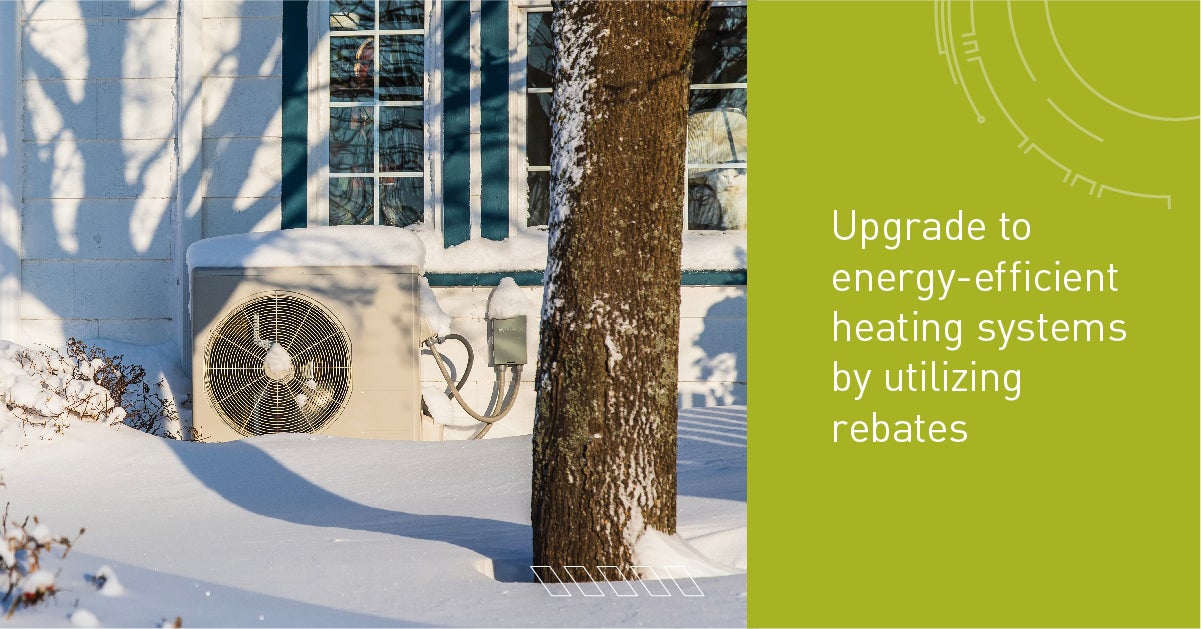
Air-source and ground-source heat pumps are increasingly popular in rural areas. They are highly efficient and can both heat and cool your home – bringing the savings year-round.
The initial cost should not be a deterrent because rebates from your local electric cooperative and different energy offices within the state and federal government can dramatically cut what you pay.
The long-term energy savings and cost-cutting rebates make them an attractive option for people who deal with both hot and cold temperatures. Also, make sure you look for systems with a high Heating Seasonal Performance Factor (HSPF2) rating to get the most out of your new system. Efficient systems start at 7.8 HSPF2 and the higher the number the more efficient.
Optimize Your Home’s Insulation
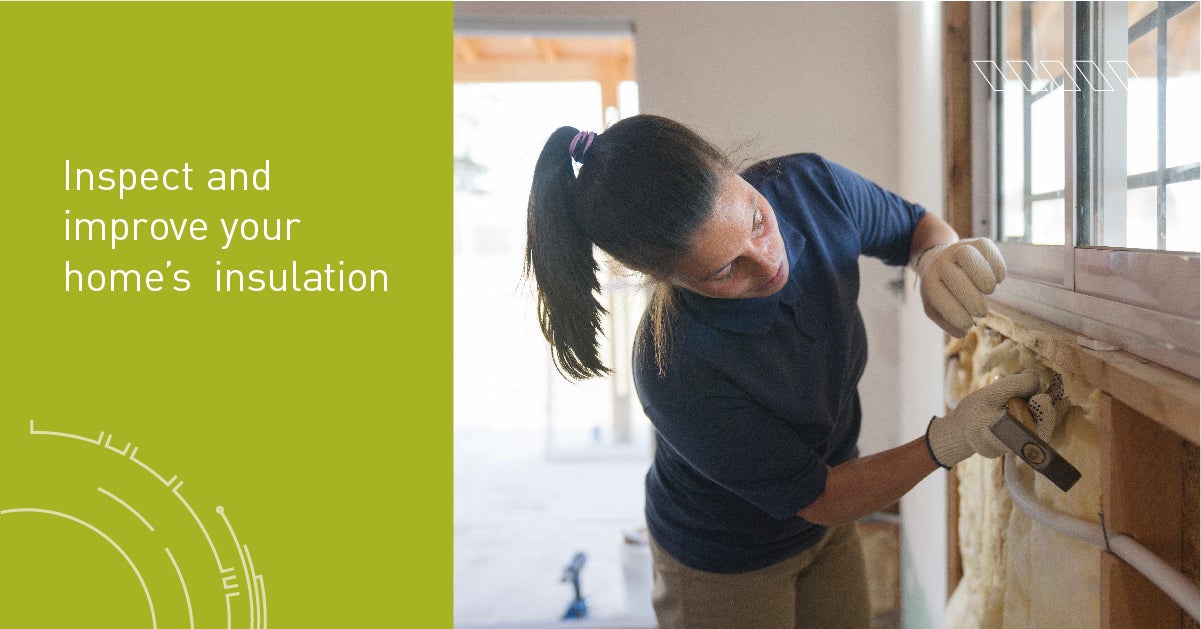
No matter how efficient your heating system is, inadequate insulation can lead to significant heat loss. Inspecting and if necessary, improving, insulation in key areas like attics, walls, and basements will keep heat from escaping while limiting drafts.
Your home is made of many layers that hopefully create one secure building envelope. Ensuring proper insulation in your home is one of the fastest and most cost-effective ways to reduce energy waste.
The Department of Energy recommends 12-16 inches of attic insulation and to focus on the areas over the floor joists and rafters -- sealing off living spaces below. Also, don’t forget to insulate the attic access door itself.
Sealing Drafts and Leaks
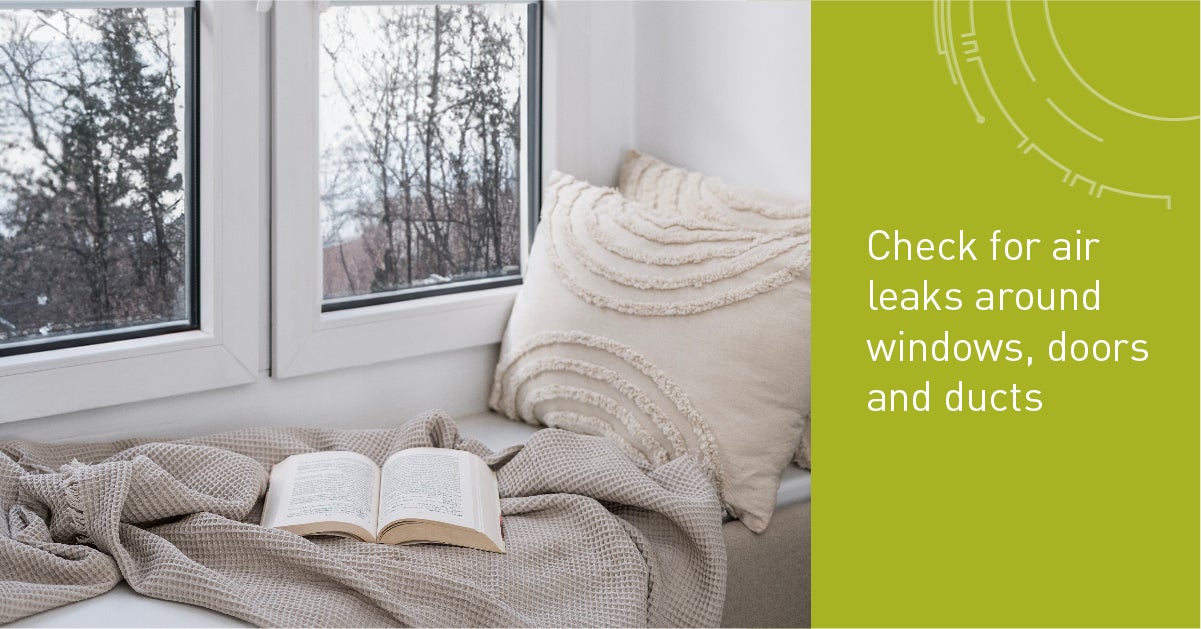
Small gaps and drafts can significantly impact heating efficiency so check for air leaks around windows, doors, and ducts. Use weatherstripping or caulk to seal these small gaps but for larger openings, consider installing door sweeps and draft stoppers.
Blackout curtains can also help to keep heat from escaping around older windows while also adding a new look to your room.
Utilize Smart Technology
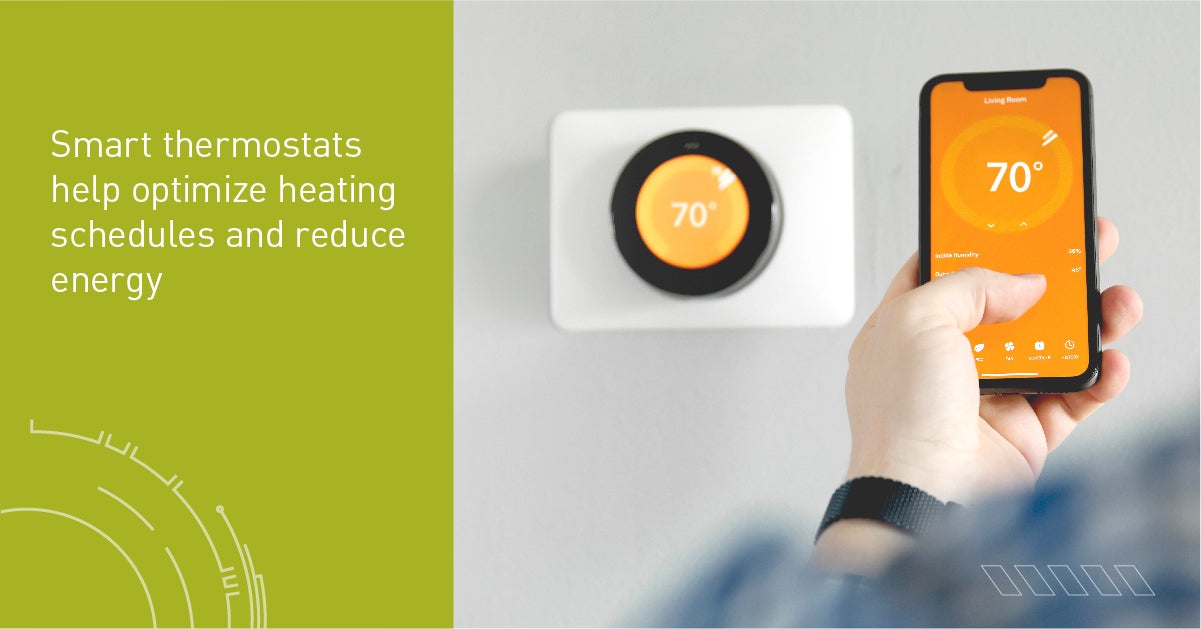
Smart thermostats and energy management systems allow you to monitor and control your heating remotely. These devices learn your habits, helping you optimize heating schedules and reduce energy use when you’re away from home.
Even without smart technology, many older models still offer programing options directly on the thermostat itself. If you have an analog or dial thermostat, get in the habit of lowering the temperature before you leave for work or school, raising it a few degrees when you return, and then lowering again when going to sleep.
Pro Tip: If you have an air source heat pump with a variable speed fan, only use the setback if you are going to be away more than 36 hours. Modern variable speed units are meant to continuously run and lower your overall power bill.
Save Money with Our Repayment Program
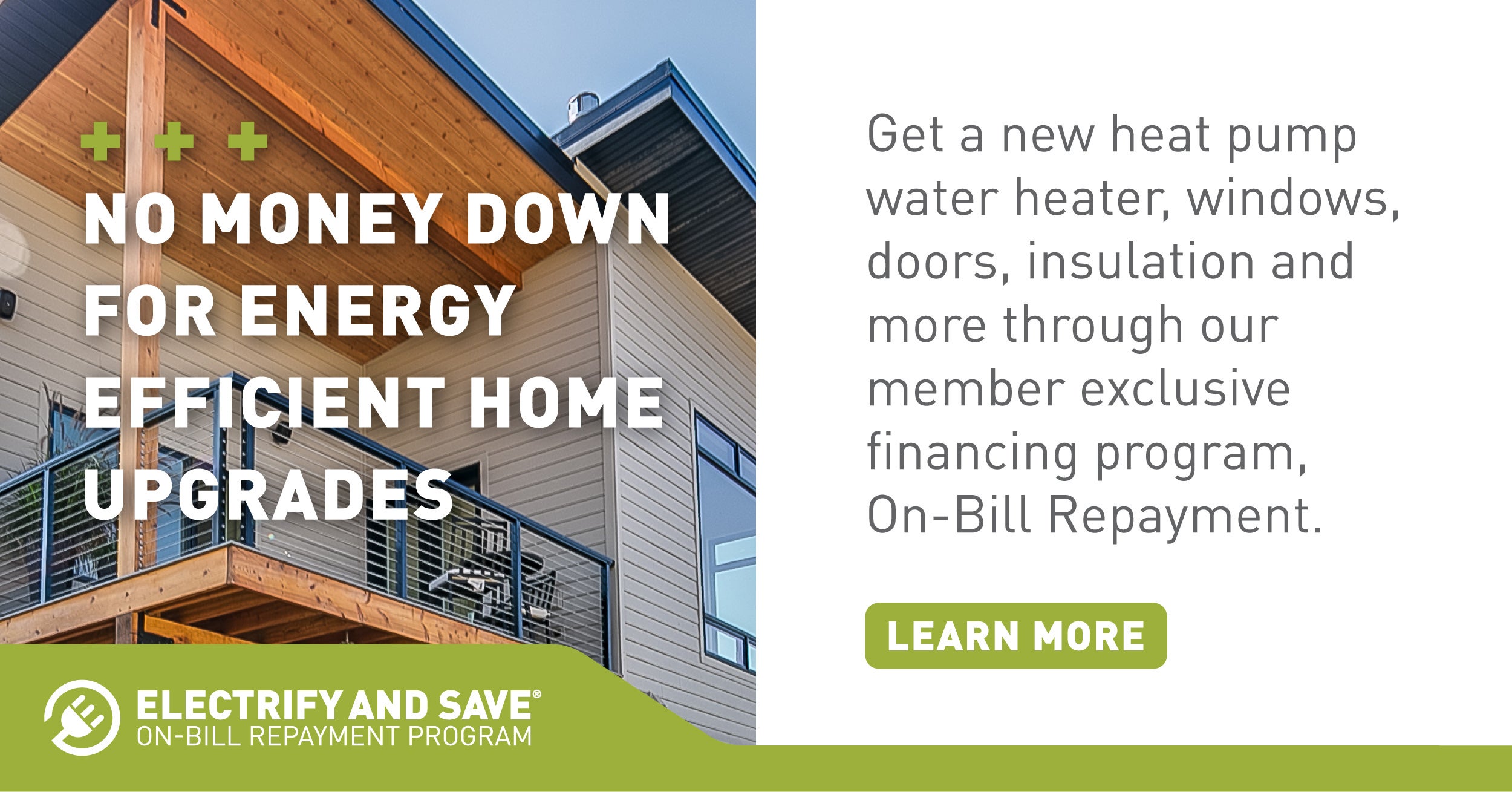
Another way to improve your home’s energy efficiency in the winter is to apply for our On-Bill Repayment Program (OBR), which covers insulation, smart thermostats, heat pumps, heat pump water heaters, windows, doors, and more.
With the OBR program, there are no upfront costs. Instead, you’ll repay the cost of the measure and installation via a voluntary tariff on your monthly utility bill. You can also combine your rebate with financing for the best deal. Not only will this save you money in the long run, as your energy savings can surpass the monthly repayments, but it’s a great time to upgrade.
Regular Maintenance
Ensure your heating system is running efficiently by scheduling regular maintenance. This includes easy steps you can take yourself like changing out the filter. If you have pets or live in a dusty area, you can do this every month or optimal use.
Maintenance done by a professional will also help extend the life of your heating system with someone checking for signs of wear and damage in addition to how it runs,
Staying Warm this Winter
As winter looms, rural communities in the West can embrace energy-efficient heating options that not only keep homes warm but also save money in the long run.
By assessing current systems, upgrading where necessary, improving insulation, and utilizing smart technology, you can prepare your home for the cold months ahead. With a little preparation, you can enjoy a cozy winter while minimizing your environmental impact and energy costs.
--
About Tri-State
Tri-State is a power supply cooperative, operating on a not-for-profit basis, serving electric distribution cooperatives and public power district member-owners in four states. Together with our members, we deliver reliable, affordable and responsible power to more than a million electricity consumers across nearly 200,000 square miles of the West. Visit www.tristate.coop.
Blog Posts
6 Energy-Saving Tips to Get Your Home Ready for Summer

Co-op-Powered Broadband Keeps People Connected When it Counts
Tri-State’s wholesale rates are stable, and forecasted to remain so to 2050

What is the Benefit of Being a Member of an Electric Co-op?