Posted 4/14/2026
Each year, utilities across the country join together to recognize the critical work of lineworkers and the many teams who support them as part of National Lineman Appreciation Day. By expanding our focus to include not just lineworkers, but also the telecommunications and substation teams who make reliable power possible, we are recognizing all the people, skills, and systems that keep the grid strong.
When the lights stay on through wind, heat, ice, and everything in between, it’s because lineworkers are out there, often before dawn and long after dark, building, maintaining, and restoring the backbone of our electric grid. From planned rebuilds that extend the life of critical infrastructure to precision “hot” work that avoids outages, these crews combine skill, training, and teamwork to protect reliability 24/7.
We joined Line Foreman Adrian Garcia to see what goes into a planned rebuild and the role his crew plays in reliability.
How long have you been with Tri-State, and how did you get here?
I’ve been at Tri-State going on 22 years. I started in 1997 with Socorro Electric—one of our member co-ops—and moved to Tri-State in 2004. Back then I didn’t know much about Tri-State, but I’d see the substation guys, started talking with them, learned more, and it sounded like a great fit. I applied and got the job.
Where are we headed today, and what’s the scope of work?
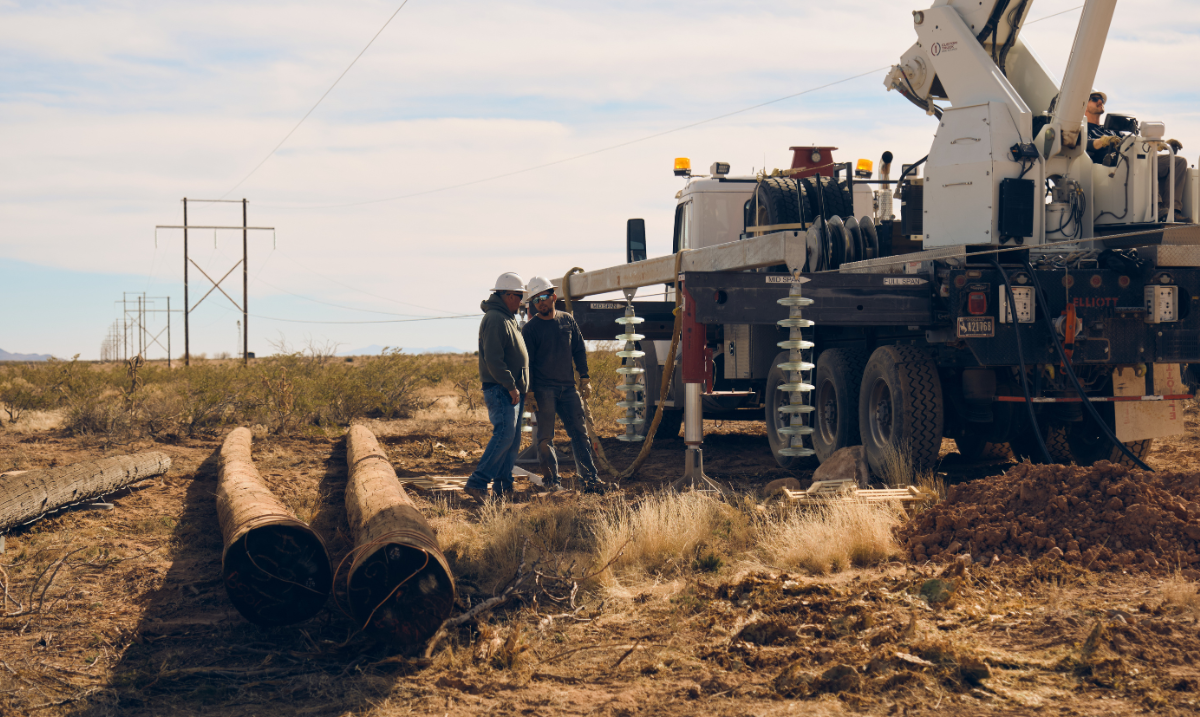
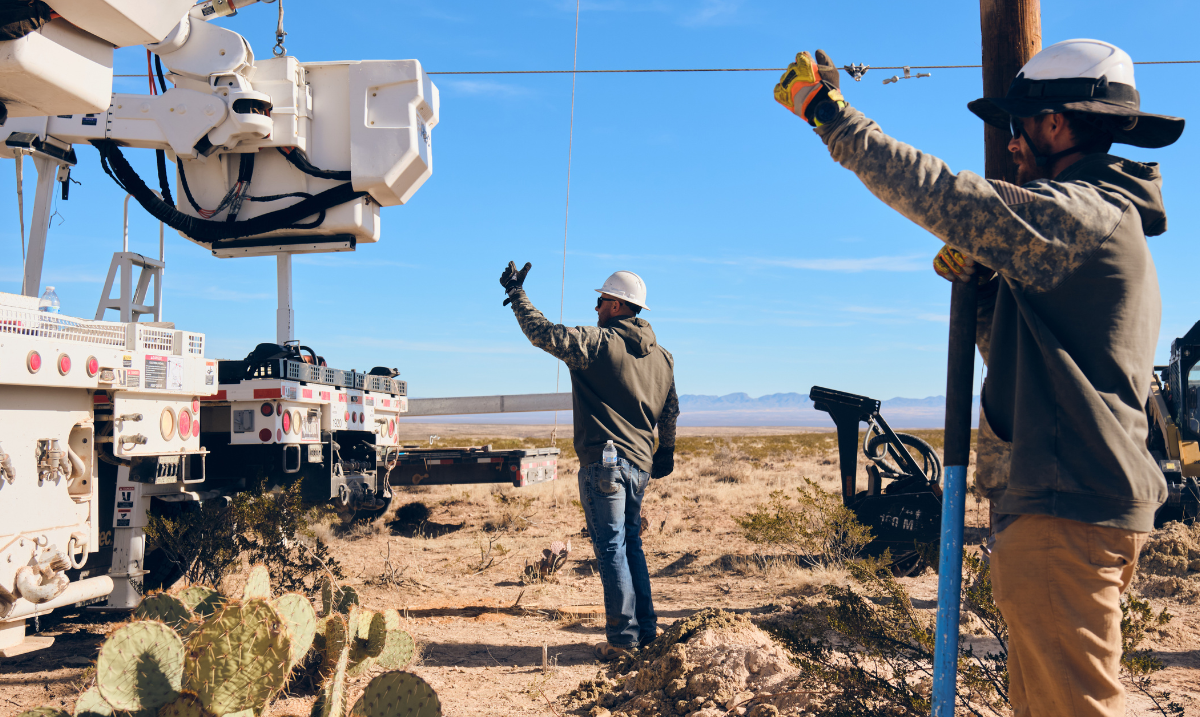
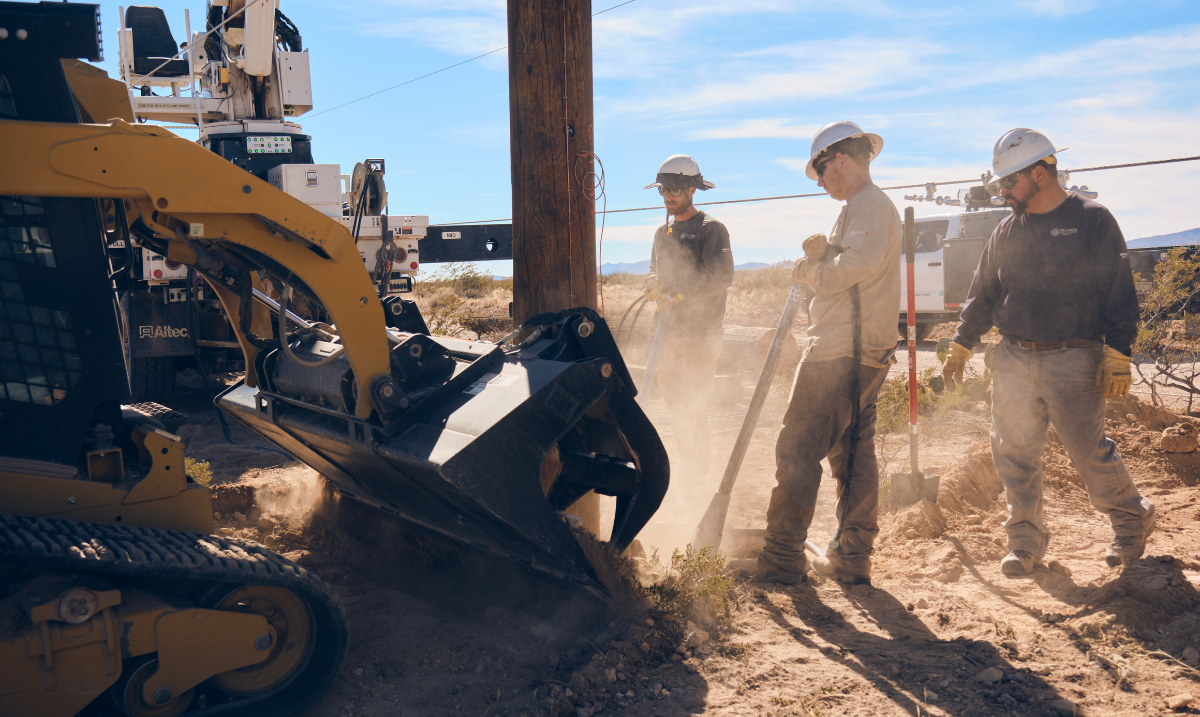
We’re in the Hatch area working on the Frontier–Picacho 115-kV line. We’ve had to change out more than 120 structures. From town, we’ve got about 10 left, and out by the Frontier substation we’ve got around 20 to go.
How many crews are on this project and what’s the schedule like?
Right now we have two crews. We work 12 days on, two days off; earlier in the job we had three crews — including folks from Durango, Cheyenne, and Pueblo — then we came back this round with two. Days run 12–13 hours. We’re rolling out at 6 a.m. and usually getting back between 6:30 and 7:30 p.m. Leave in the dark, come home in the dark.
What do you like about working in New Mexico and about this job in general?
The variety. Northern New Mexico is mountains; southern New Mexico is high desert. Weather can be totally different across the state, which helps us plan. If it’s tough up north, we schedule work down south. When it’s over 100 degrees down here, we try to move north where it’s 80s or 90s and the same in the winter. When it’s below freezing up north, we can schedule work in the south where it’s usually 40s or 50s.
Are these big rebuilds planned far in advance?
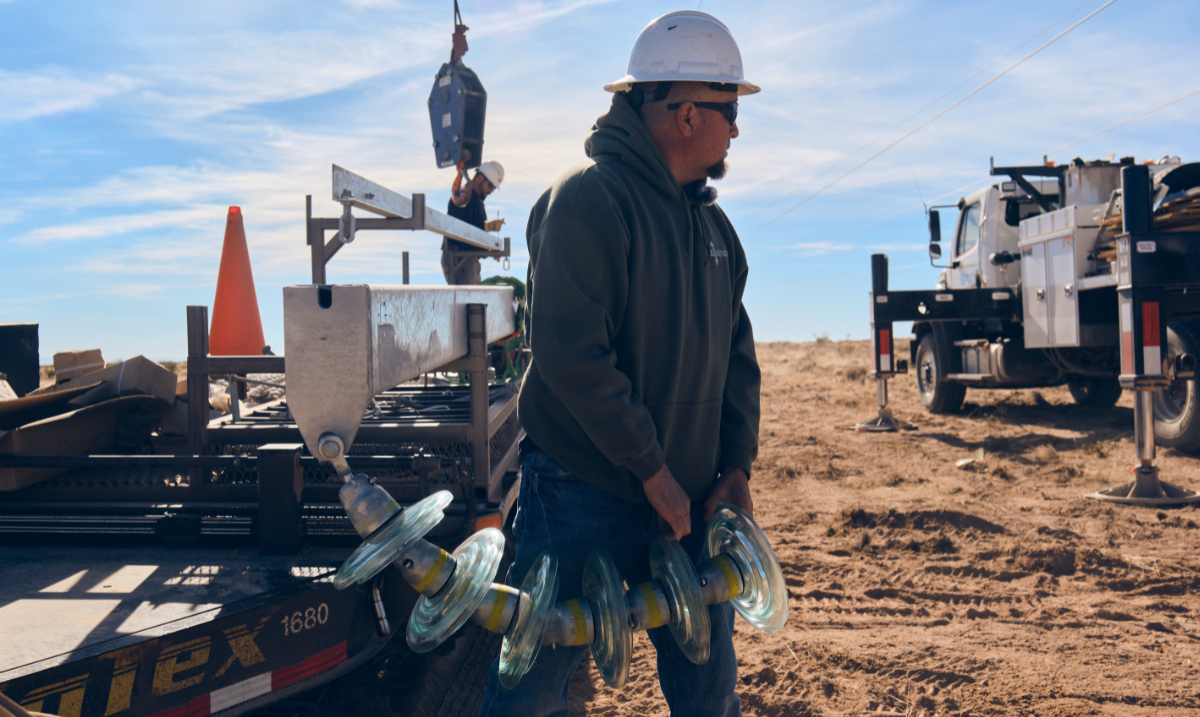
Yes. Typically at least a year out, so we know they’re coming. Some jobs include pulling in new conductor or fiber; this one is primarily structure replacements. Many of these lines are older with some sections dating back to the 1940s.
How do you keep power on while you rebuild or replace structures?
We take a clearance and de-energize the section we’re working on, but most of these lines are loop-fed so we can reroute power from another direction and keep service on. In some northern areas we have more radial lines; when that happens, we’ll work “hot” to avoid an outage if possible.
For people who don’t know line work, what would surprise them most?
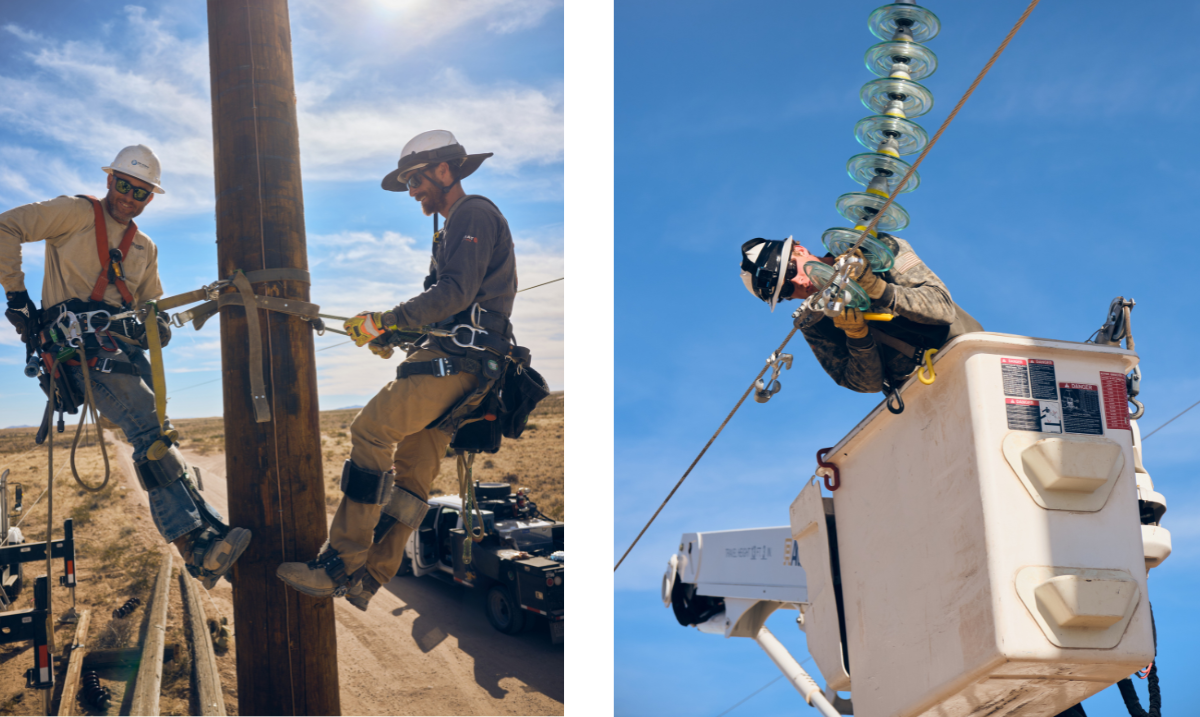
A lot of times we do barehand work, so we actually get energized to the same potential as the wire. On a 345,000-volt line, we get energized to that potential as the wire, but current doesn’t flow through us because we’re isolated in the bucket. We wear a full barehand suit (pants, jacket, hood, gloves) with special linings. Everything is bonded together, and we test and set our equipment properly. You trust your crew and the meters and alarms you’ve set. You shouldn’t feel it, but sometimes it feels like ants crawling on you.
Any moments that capture the “community” side of this work?
Not long ago we rolled up on a rollover accident just as it happened. The driver had crawled out and said his wife was trapped. We called 911 and helped get her out, stayed until the ambulance arrived, then headed to our job. On the way back, they asked us to help pull the car back onto its wheels so they could tow it. It’s not part of the job description, but you help where you are.
What do you wish people understood about lineworkers?
I think in the real world, people don't really know what we do. I used to say it all the time, people would see us in the coffee shops or at the restaurants, but at two o'clock in the morning when the lights were out, I bet you didn't see us then, especially in the freezing rain and snow.
We’re out there 12–14 hours, it’s physically challenging, and you have to be alert the whole time.
What else do line crews handle that people might not see?
It's not just maintenance on the line. We do our own right of ways. We run bulldozers, we do our own vegetation management. We have mulchers, forestry heads, and chainsaws. We cut incompatible vegetation down, mulch 'em, chip 'em. There's just so much to it that goes on besides the typical line work. That's what makes it exciting and fun; you never do the same thing. There's always something different.
Listen to Adrian's Western Watts podcast episode here: https://tristate.coop/ride-along-adrian-garcia-line-maintenance
Precision that Protects: How Substations Keep Power Flowing
The Invisible Network Powering Our Electric System
--
This interview is part of The People Behind the Power™, where we showcase the extraordinary work Tri-State employees are doing to keep the lights on for our members across the rural West. This series pulls back the curtain to share the real stories of the individuals whose dedication powers our communities. Because when you meet the people behind the power, you see the heart, talent, and perseverance that goes into every flip of a switch.
From relationship managers to cybersecurity engineers to substation technicians, the people needed to power our cooperative are as unique as the territories our members serve. If you are interested in applying your skills to improve the lives and livelihoods of our members, check out open positions here.
Blog Posts
Energy Saving Maintenance Checklist for Small Businesses

The Benefits of Heat Pumps in Cold Climates

How to Create an Energy-Efficient Laundry Room

Energy Saving Tips While You're Away on Vacation
Benefits of Installing an Attic Fan for Summer

How to Prepare Your Home for a Summer Heat Wave

8 Home Energy Efficient Tips for Spring

11 Tips for a More Energy Efficient Home