Posted 1/16/2026
Technology and Training Strengthen Rural Fire Response
In rural America, nearly two-thirds of firefighters are volunteers, and they’re often the first line of defense when wildfires ignite. But as fire seasons grow longer and more intense across the West, these departments face mounting challenges. That’s why Tri-State Generation and Transmission Association is partnering with San Isabel Electric Association (SIEA) to deliver superior technology and training to fighting fires, because the best wildfire response begins before the flames appear.
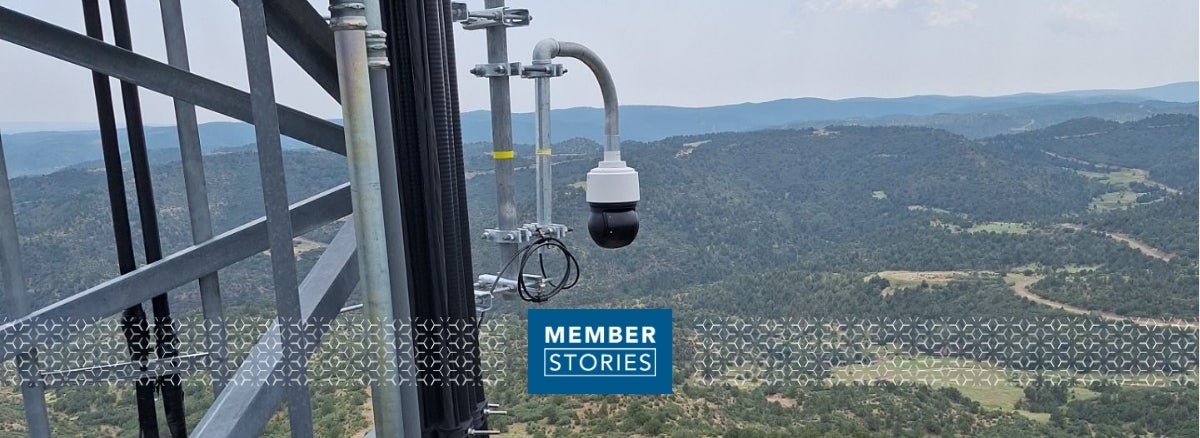
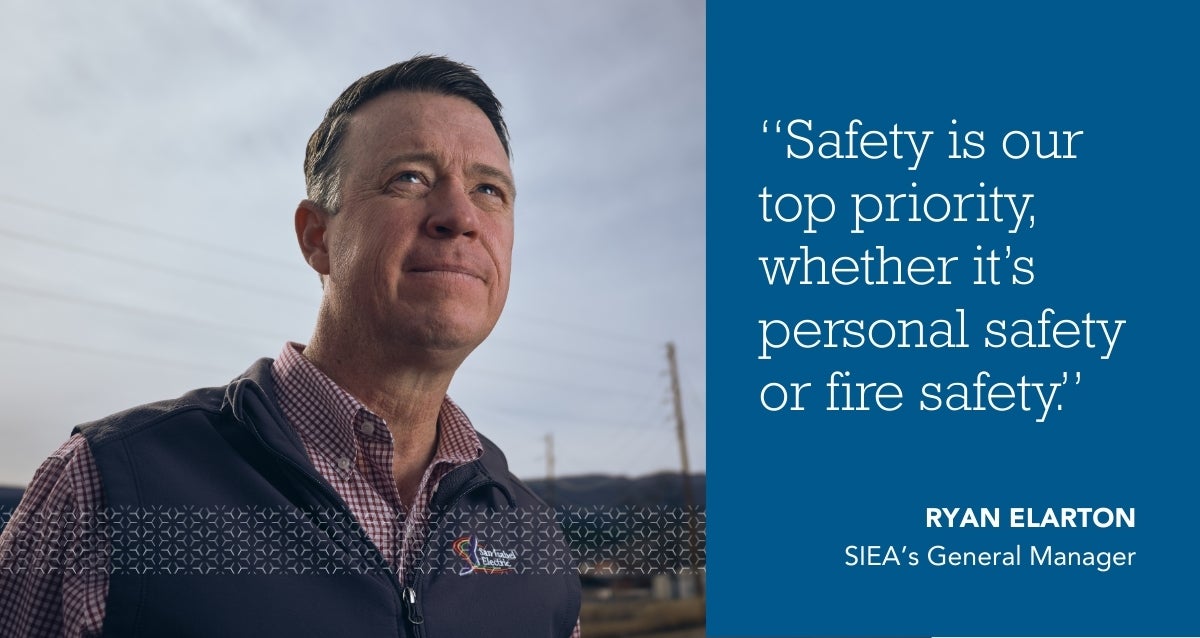
“Safety is our top priority, whether it’s personal safety or fire safety,” says SIEA’s general manager Ryan Elarton. “It’s something we prioritize every day, and you see it in our budget and wildfire mitigation plan.” On paper, that looks like expanded vegetation management and system hardening. In practice, it’s crews clearing rights-of-way that now double as access routes and firebreaks. It also includes two AI-enabled cameras that can spot smoke early and alert the correct parties within seconds.
Early Alerts, Safer Deployments
Bought in partnership with Tri-State, the two Pano cameras are part of a regional push to speed up detection and enable precise, safer crew deployments. “Having these camera systems really helps us,” says Tim Paulson, a third-year SIEA lineman apprentice who also serves as chief of the Spanish Peaks Volunteer Fire Protection District. “We can pinpoint a location and start planning how we’re going to fight that fire before we’re ever there. Before the cameras, we had to send a crew just to drive around and find the fire first. That delays response.”
AI-based wildfire detection platforms like Pano continuously scan the landscape with 360-degree cameras to identify smoke and push alerts with precise coordinates to responders after human verification. Many systems also layer satellite imagery and weather data to improve situational awareness. In cooperative territories, that means faster decisions and better protection for crews working near energized infrastructure.
Training that Sends Firefighters Home Safe
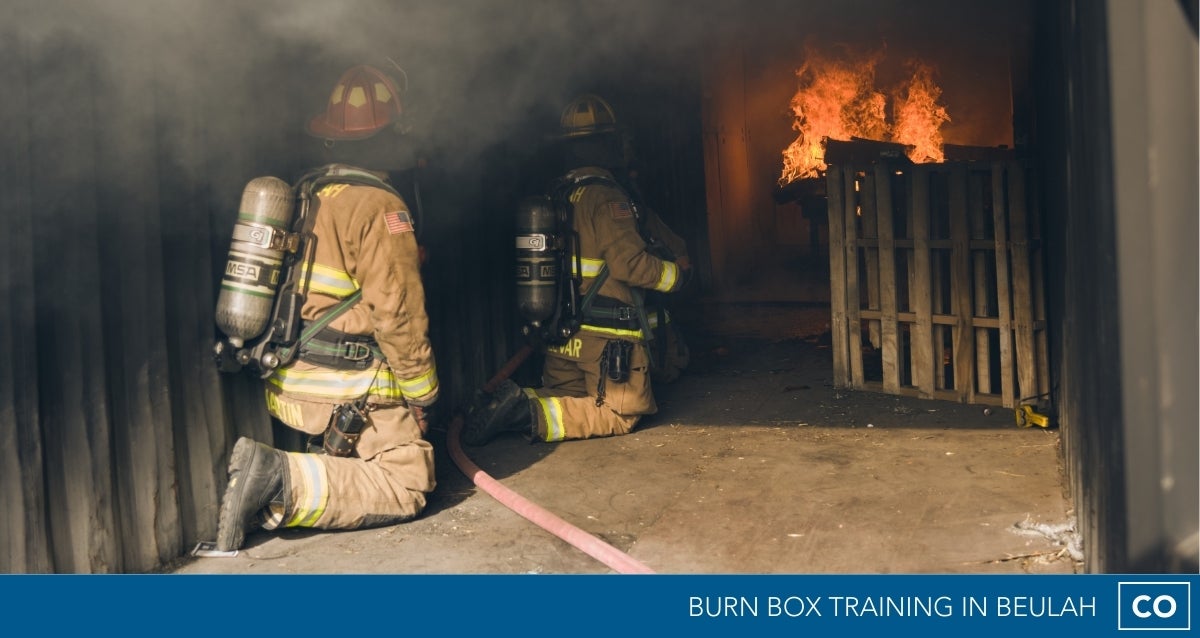
Technology is only half of the story. In rural America, where volunteer departments shoulder most emergency responses, hands-on training saves lives. That’s why Tri-State joined SIEA, CoBank, and Basin Electric to help fund a live fire “burn box” in Beulah, Colorado.
“Being able to offer new students and ongoing members live-fire training builds confidence. They see their gear is meant to be in those conditions,” says Fire Chief Bryan Ware from Beulah Fire Protection District. “For seasoned firefighters, it’s a chance to study fire behavior in modern construction. The ultimate goal is simple: they go home at the end of every shift.”
SIEA also has a mobile electric safety demonstration trailer that helps firefighters see how power behaves, and what to do, and not do, around lines. This coordination and specialized training saves lives, prevents additional fires, and ensures safer emergency response.
Fostering Trust with First Responders
If the fire service is the first line of defense, electric cooperatives are often the first phone call. During structure fires and wildfires, utilities work closely with fire crews to de-energize specific power lines to reduce the risk of electrocution. Water streams, metal ladders, and equipment can conduct electricity, putting firefighters at extreme risk so they rely on real-time communication with electric cooperatives like SIEA to know which lines are live and which have been safely shut down.
Ron Jameson, Fire Chief of La Veta Fire Protection District, echoes the sentiment. “Every time there's a fire, we need them to come and shut the electricity off,” says Jameson. “Whenever we need SIEA, the response is instantaneous. We’re never sitting out here long waiting for help.”
De-energizing lines, isolating circuits, and clearing access are mission-critical for firefighters, especially in rugged terrain. “As a firefighter and working on a line crew, I see how important it is that the two entities work together,” says Paulson. “The better they work together, the safer the community is and the safer the firefighters are.”
Tri-State’s approach recognizes that reality by investing in early detection, training, and relationships. That’s how a spark stays small, how crews deploy with data instead of guesswork, and how the volunteers who protect so much of rural America get what they need to do the job safely.
Built on the Spirit of Volunteerism
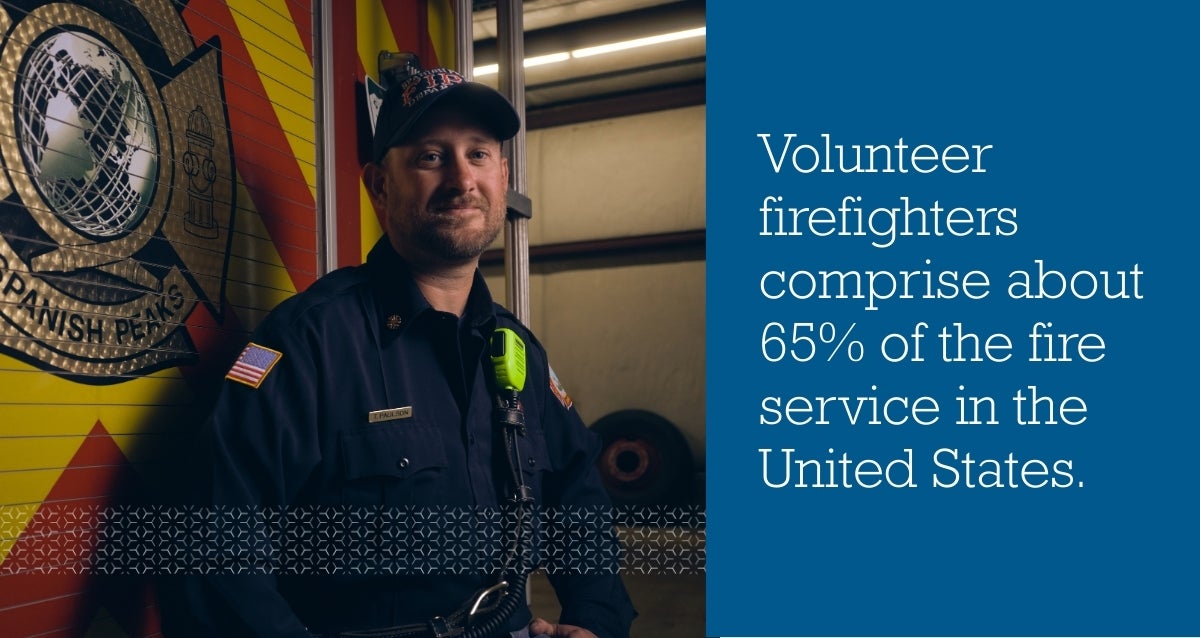
That community connection extends to the brave individuals that suit up when emergencies occur. Volunteer firefighters comprise about 65% of the fire service in the United States. Most departments are either fully or mostly volunteer, and the time donated by those responders saves localities around $50 billion each year, according to the National Volunteer Fire Council. These numbers underscore the reality that this country depends on volunteers as their first line of defense, especially in rural areas.
In addition to Paulson, the Spanish Peaks Volunteer Fire Protection District consists of 20 volunteers including eight husband-and-wife pairs. It's truly family protecting family and neighbors helping neighbors. Volunteers know their communities intimately, which fosters trust, improves response times, and strengthens local resilience.
At the same time, volunteer ranks have trended downward in recent decades even as call volumes have tripled, largely due to growth in emergency medical incidents. That imbalance strains small departments and heightens the value of local partners who can close gaps in equipment, training, and situational awareness.
Tri-State’s Multi-Layered Mitigation
For Tri-State, the work with SIEA is one facet of a multi-layered wildfire mitigation strategy deployed across the states our members serve. As a cooperative G&T serving nearly a million consumers through those member systems, Tri-State combines science-based monitoring and alerts with risk reduction and operational controls. That includes 24/7 wildfire risk modeling (wind, smoke, drought, fuels), drone inspections to accelerate line assessments, daily geographic analysis with active fire data layers, and hardware upgrades like replacing wood structures with steel or wrapping poles with fire-resistant materials. Internally, a wildfire steering committee and annual wildfire summit help coordinate practices and share lessons across member territories.
These measures are designed for a single purpose: keep crews and communities safe while maintaining reliable power. They also complement the groundwork done by distribution co-ops like SIEA, whose vegetation management reduces ignition risk and opens corridors for fire department access during emergencies when every second matter.
The Bottom Line
Wildfire risk isn’t going away. But with AI-powered detection, year-round mitigation, and cooperative-driven training, SIEA and Tri-State are strengthening rural fire response across southern Colorado and setting an example for how the grid and the fire service can work as one to protect the many.
--
About Tri-State
Tri-State is a power supply cooperative, operating on a not-for-profit basis, serving electric distribution cooperatives and public power district member-owners in four states. Together with our members, we deliver reliable, affordable and responsible power to more than a million electricity consumers across nearly 200,000 square miles of the West. Visit www.tristate.coop.
Blog Posts

Van Life: How to Make Your Van More Efficient

10 Easy Ways for Kids to Conserve Energy at Home and School
Important Summer Storm Safety Tips

How to Safely Power Your Home Workouts
The Best Solar Camping Gadgets for Summer
Important Generator Safety Tips
4 Electrical Safety Tips Every Kid Should Know
How to Cool Your Home Without Central Air Conditioning