
Posted 4/14/2026
Each year, utilities across the country join together to recognize the critical work of lineworkers and the many teams who support them as part of National Lineman Appreciation Day. By expanding our focus to include not just lineworkers, but also the telecommunications and substation teams who make reliable power possible, we are recognizing all the people, skills, and systems that keep the grid strong.
Our substation technicians and relay specialists maintain breakers, transformers, SCADA systems, protective relays, and thousands of components that must work flawlessly to protect the flow of power. Their work demands a blend of electrical expertise, precision testing, and a deep understanding of how every part of the system interacts.
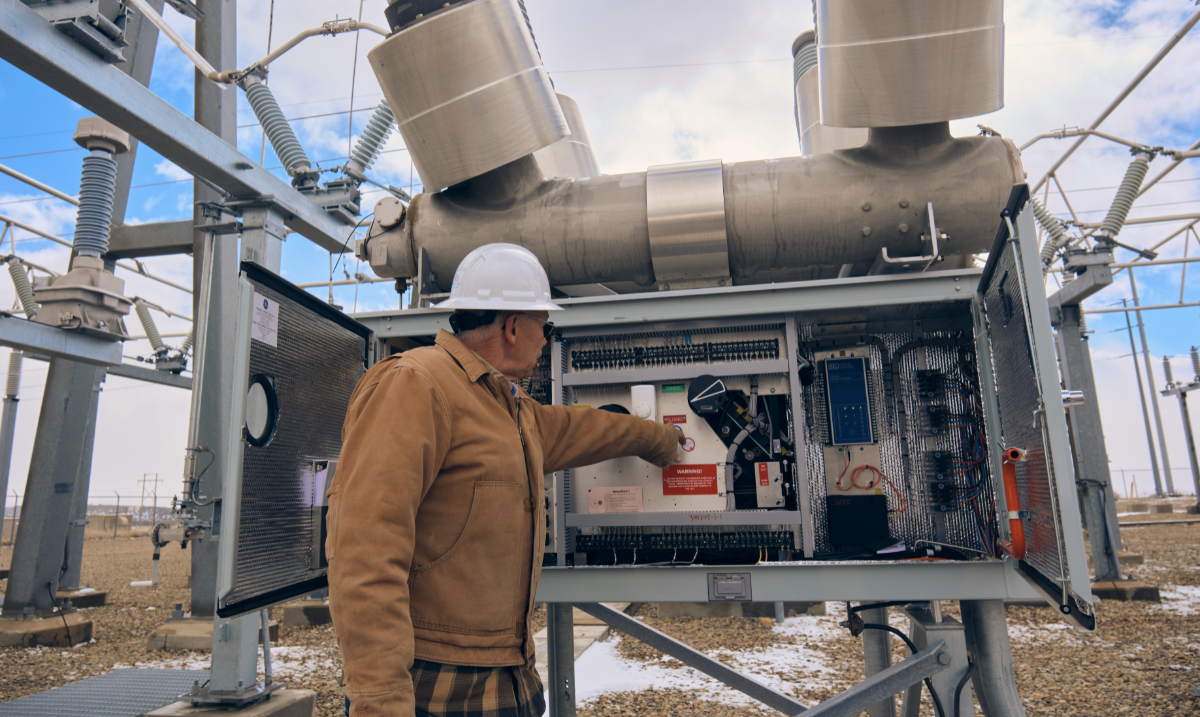
We joined Journey Level Substation Technician John Swanson on his way to perform a switching program to test a protection Relay at a facility in Cortez, Colorado to learn more about his role in keeping the lights on.
Can you share a little about your background and how you came to Tri-State?
I have about 40 years of experience in the electrical industry. I spent many years as a Master Electrician before joining the Navy Reserves as a Seabee in 2008 as an electrician and eventually worked as a high-voltage work leader at the Groton, New London CT submarine base. From there, my wife and I moved from the East coast to West coast, and I worked as an electrical engineering tech, served tour in Afghanistan as a Construction Control Representative for the Army Corps of Engineers before coming to Tri-State and landing here in Cortez.
What’s the relationship between generating sources and a Substation?
They are two different entities within Tri-State’s generation and transmission. Generation produces the power that flows into our substations at voltages over 100,000 volts; it is stepped down to lower distribution voltages for our members.
How would you explain a substation to someone with no knowledge of the industry?
I’d tell them that when the power is generated, it travels via high-voltage transmission lines into a substation, which steps down the voltage into more usable voltages to be sent out over members’ distribution power lines. Before it goes to your house, it’s stepped down to the voltage you use in your home or business.
If you're comparing the electrical system to roads, highways are the transmission lines with the highest speed, distribution lines are like local avenues, and then your driveway is the end user. When traveling, the speed, or in this case the voltage, keeps getting stepped down until it’s safe enough to enter your home.
When you go to a substation for maintenance, what does that process look like?
First, I submit the switching in advance so our production engineers can review and approve it. Then it goes through operations to make sure it won’t affect anything else on the system. Operations then notify outside entities such as WAPA or the member, so everyone knows what we’re doing. Once approved, I get a switching program and can proceed with my work.
Can you explain what switching is?
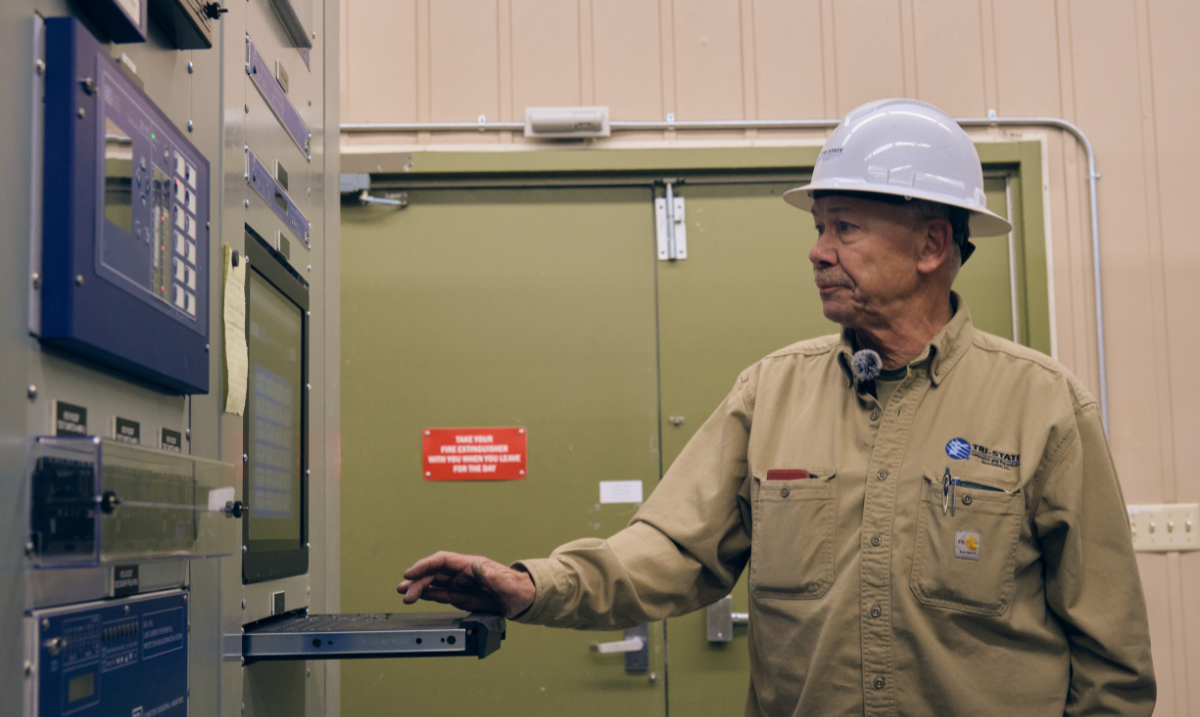
Switching is a step‑by‑step procedure to safely take a piece of equipment out of service so you can work on it without affecting anything else. It prevents injuries and keeps us from accidentally shutting off power to customers. If switching isn’t done correctly, you could open the wrong breaker and interrupt power.
The switching program involves consistent communication between the switchman and dispatch to make sure everything goes as planned. If either side sees an issue, we stop and correct it before continuing.
How does your team work with transmission maintenance to keep power reliable?
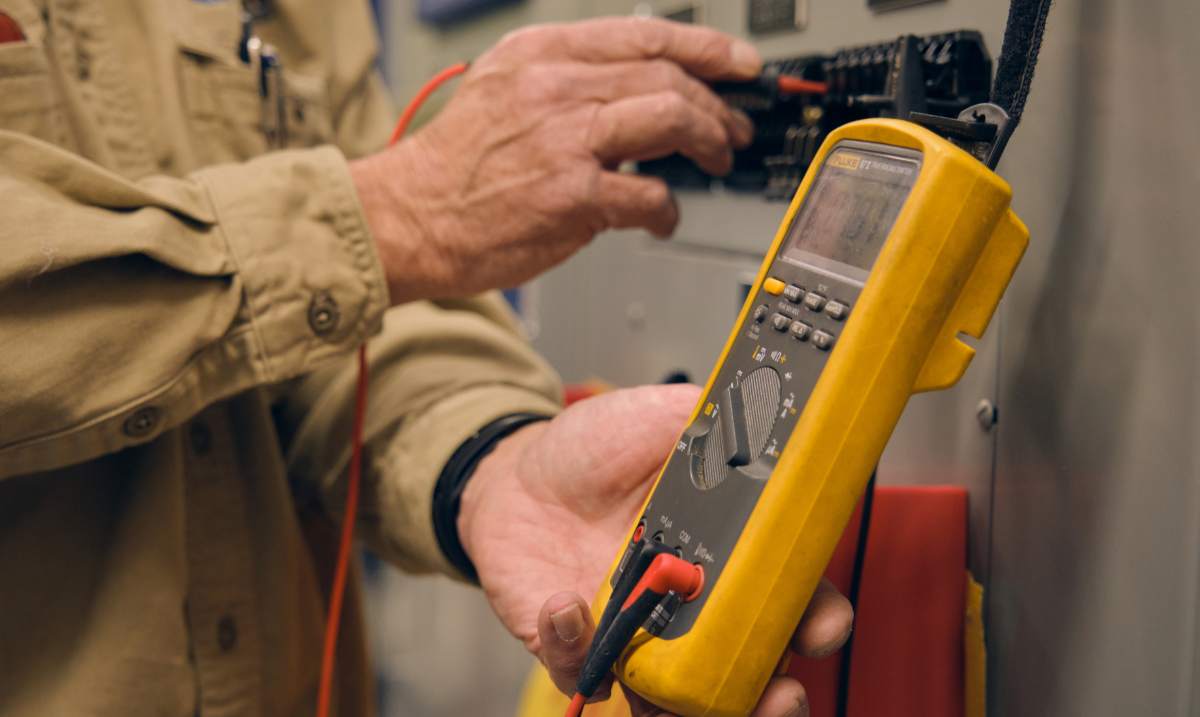
Our crew works very well together. The relays we install have to communicate with dispatch through SCADA, which electronics specialists support. If we’re working on a line or in a substation and need help, we can call in a line crew or heavy apparatus crew to bring equipment and knowledge to assist. We really do work as one team to keep the system reliable and restore power quickly.
Can we talk a little about mobile substations?
Mobile substations are one of the biggest assets we offer members during transformer maintenance or major outages. In an emergency, we even get special permission from the Department of Transportation to move them when other loads aren’t allowed on the road.
A mobile sub has a transformer, a circuit breaker, and a circuit switcher. In an emergency we can set it up to restore power while repairs are underway. During a major maintenance project, if there’s no way to back feed the load, we’ll put the mobile in place so the work can happen without interrupting service.
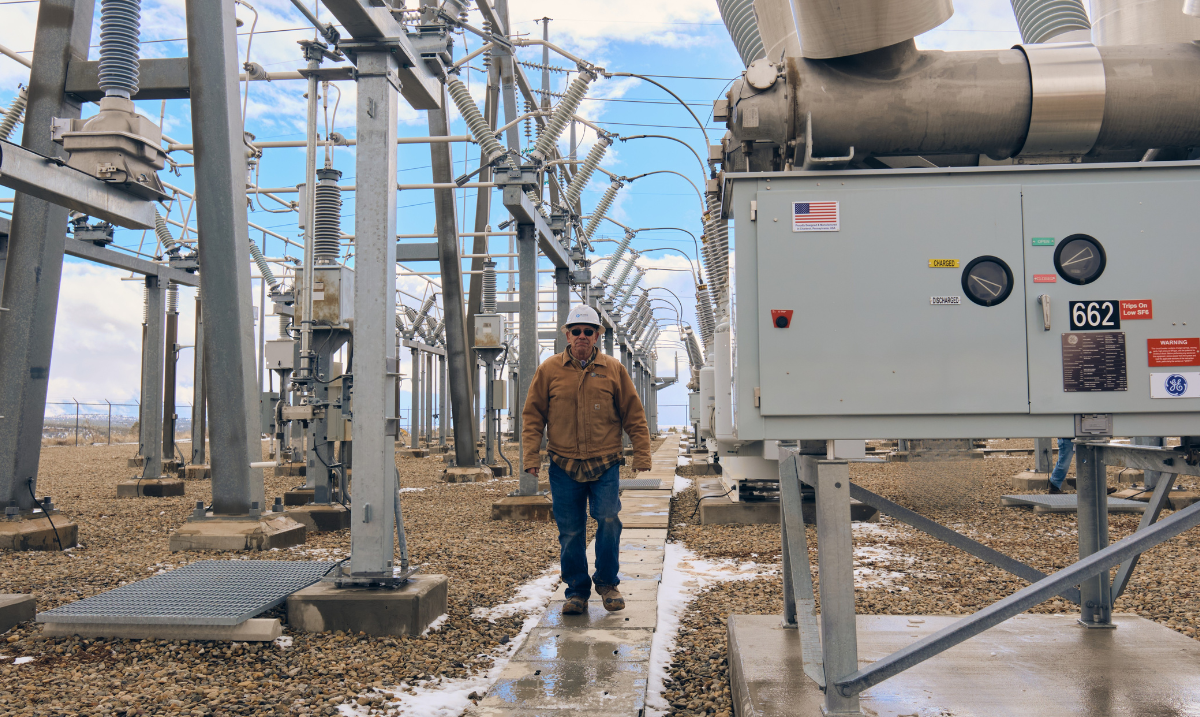
This is important because not all our members have these, right?
That’s right. A utility might have one for a very specific voltage, but it doesn’t cover all their substations. We offer ours to help restore power and have done so several times in the past.
Finally, what does it mean to do this work in a cooperative, serving the community where you live?
It gives me a lot of pride. Whether it’s turning power back on after something trips or identifying issues before they become problems, that’s what we focus on. We work hard to maintain equipment so it doesn’t fail—but when something does fail, we have the knowledge and tools to fix it quickly. We can bring in the mobile sub or reroute power to get lights back on fast so members aren’t without electricity for long.
Listen to John's Western Watts podcast episode here: https://tristate.coop/ride-along-john-swanson-substation-maintenance&nb…;
Built for Reliability: A Ride‑Along with Lineworkers
The Invisible Network Powering Our Electric System
--
This interview is part of The People Behind the Power™ where we showcase the extraordinary work Tri-State employees are doing to keep the lights on for our members across the rural West. This series pulls back the curtain to share the real stories of the individuals whose dedication powers our members’ communities. Because when you meet the people behind the power, you see the heart, talent, and perseverance that goes into every flip of a switch.
From relationship managers to cybersecurity engineers to substation technicians, the people needed to power our cooperative are as unique as the territories our members serve. If you are interested in applying your skills to improve the lives and livelihoods of our members, check out open positions here.
Blog Posts
4 Ways to Use Energy Wisely at Home
Home Remodeling Tips for Better Energy Efficiency
7 Great Benefits of Electric Bikes
Home Maintenance Checklist for Spring
What is Beneficial Electrification?
Energy Saving Water Heaters

How to Make Your Home More Energy Efficient in 2021
Advantages of Heat Pumps for Energy Efficiency