
Posted 5/13/2026
10 things we learned about birds, wildfire, & protecting the grid
Welcome to The People Behind the Power™, where we showcase the extraordinary work Tri-State employees are doing to keep the lights on for our members across the rural West. This series pulls back the curtain to share the real stories of the individuals whose dedication powers our communities. Because when you meet the people behind the power, you see the heart, talent, and perseverance that goes into every flip of a switch.
In honor of World Migratory Bird Day, we spoke with Diana Leiker, Tri-State’s wildfire mitigation manager and avian protection program lead, about the surprising ways birds, wildfire, and grid reliability intersect. As North America faces significant declines in bird populations, utilities are playing an important role in protecting habitats and the species that depend on them. Leiker’s passion for conservation and a love of the outdoors now shapes her work safeguarding both natural ecosystems and the infrastructure communities rely on every day.
Read more below.
1. Protecting birds and protecting the grid go hand in hand
With a background spanning forestry, wildfire mitigation, and wildlife biology, Leiker sees the grid through multiple lenses. Her avian protection work has deepened her understanding of how the electrical system operates and where risks can emerge.
In fact, managing bird activity on infrastructure improves reliability while reducing harm to wildlife. That was a motivating factor in Tri-State's creation of their Avian Protection Program over a decade ago, resulting in a rare win-win-win where safety, service, and conservation all align.
2. Utility companies are leaders in wildlife protection
The electric utility industry is one of the few sectors with formal, nationwide guidance for protecting wildlife. Programs like the Avian Power Line Interaction Committee — which Leiker chairs — works to find solutions to avian use of electrical infrastructure and the committee also funds research and provides training and guidance on minimizing impacts to birds on electrical infrastructure, while improving and maintaining electric reliability.
3. Without these protections, the impacts would be significant
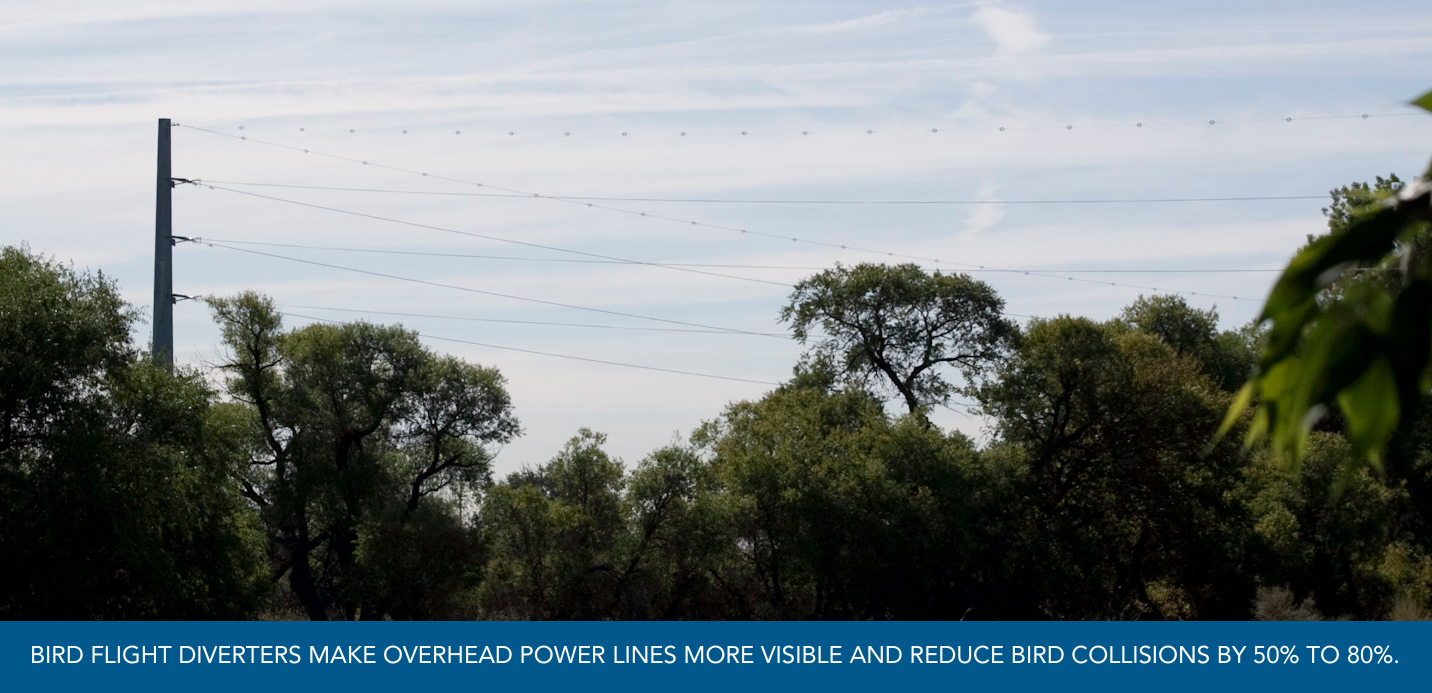
If utilities stopped implementing bird protection measures, the result would likely include increased bird mortalities from electrocutions and collisions, and loss of active nests and young. Reducing bird interactions on our system improves the safe and reliable operation of our infrastructure. Tri-State operates transmission voltages, which greatly reduces our risk of electrocutions on our structures. Our primary focus is on reducing bird collisions with our lines. Tools like flight diverters (pictured above) and careful planning for new construction to avoid high-risk habitats like wetlands and rivers help significantly reduce collision and habitat-related impacts.
4. Birds are indicators of environmental health
Bird populations can reveal dangerous changes in ecosystems long before we detect effects on humans. Dichloro-diphenyl-trichloroethane (DDT) was an insecticide widely used in the 1940s before it was banned decades later due to its severe reproductive risks. Sadly, that risk was first discovered in bald eagles after causing their near extinction. The decline of bald eagles due to DDT-related egg thinning, and their recovery after the pesticide was banned, demonstrates how bird species can be the first indicators of the human impact on the environment.
5. Avian protection is built into Tri-State operations
From pre-construction nest surveys to adjusting work during nesting season, avian protection is integrated into day-to-day operations. In some cases, biological monitors even observe active nests so crews can continue work without disrupting wildlife.
6. Even complex wildlife situations have creative solutions
One of Leiker’s favorite stories on the care and coordination that goes into wildlife protection efforts happened at Craig Station in 2025. The staff at Craig are always looking out for the wildlife and reach out anytime they have wildlife concerns. A juvenile great horned owl chick got caught in the area and couldn’t get out. Colorado Parks and Wildlife collected the young owl and took it to a local wildlife rehabilitation center in Steamboat Springs, who safely introduced it to another great horned owl pair who adopted it, and it fledged successfully. I have lots of great stories of our line crews working with state wildlife agencies to rescue young birds nesting on structures that need immediate maintenance.
7. Birds can directly impact wildfire risk
Nesting on structures or interacting with energized equipment can lead to outages and, in some cases, spark wildfire events. When birds nest on infrastructure, crews often delay work until the young have fledged. Federal protections like the Migratory Bird Treaty Act guide these decisions, balancing operational needs with wildlife protection.
8. Vegetation management protects more than just the grid
Managing trees and fuels in rights-of-way reduces outage risk, helps mitigate wildfire risk and can benefit wildlife. Low-growing plant communities in managed corridors can support pollinators, birds, and provide travel corridors for big game and other wildlife species.
While some landowners worry about tree removal and its potential impact on their property values and privacy, vegetation management is a critical component of our wildfire mitigation strategies.
9. Wildfire planning is as much about policy as it is about fieldwork
As part of its ongoing commitment to wildfire mitigation, Tri-State recently submitted an enhanced wildfire mitigation plan in Wyoming that reflects updated strategies, practices, and coordination efforts. The plan formalizes and expands upon the existing wildfire mitigation work while providing transparency and accountability for regulators and the public.
10. Wildfire mitigation is truly a team sport
No single department owns this work. The entire organization is involved in our wildfire mitigation efforts, and the Wildfire Mitigation Department cannot be successful without the support and coordination from nearly every department at Tri-State.
The Bigger Picture
Together, these insights highlight a bigger picture: building a reliable energy grid goes hand in hand with protecting the natural world around it. From migratory birds to wildfire risk, thoughtful stewardship helps ensure both ecosystems and communities can thrive.
--
From relationship managers to cybersecurity engineers to substation technicians, the people needed to power our cooperative are as unique as the territories our members serve. If you are interested in applying your skills to improve the lives and livelihoods of our members, check out open positions here.
Blog Posts
4 Ways to Use Energy Wisely at Home
Home Remodeling Tips for Better Energy Efficiency
7 Great Benefits of Electric Bikes
Home Maintenance Checklist for Spring

What is Beneficial Electrification?
Energy Saving Water Heaters

How to Make Your Home More Energy Efficient in 2021

Advantages of Heat Pumps for Energy Efficiency