
Posted 07/13/2026
Power on standby: The quiet asset protecting co-op members
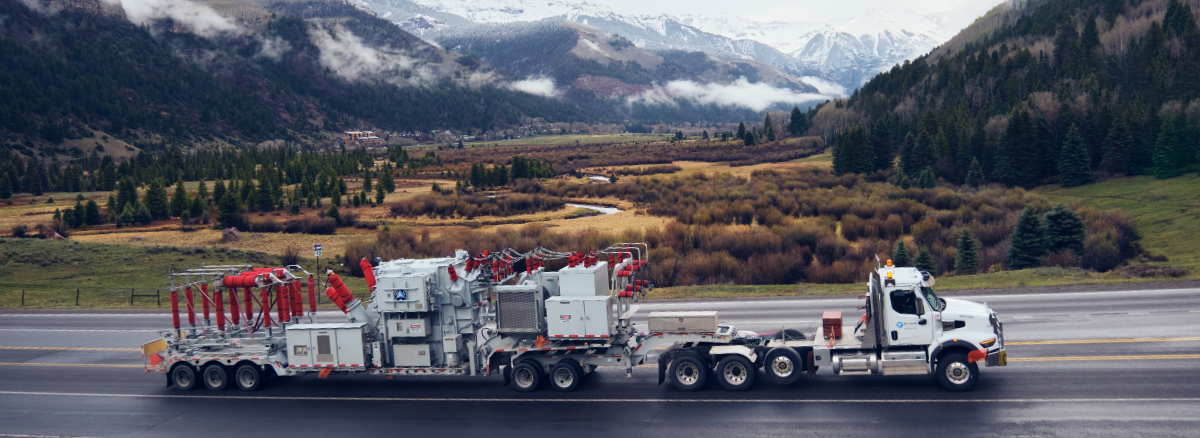
Most people who pass a mobile substation on the road have no idea what they're looking at.
To the average driver, it appears to be just another oversized load rolling down the highway. In reality, it's a backup plan on wheels — a portable substation that can be dispatched wherever it's needed to support maintenance, replace critical equipment, or help restore power during emergencies.
For Tri-State members, that mobility provides something equally important: peace of mind. While few people will ever see a mobile substation in action, its presence allows crews to perform essential work, respond to unexpected equipment failures and maintain reliability with minimal interruption to the communities they serve.
“Mobile substations are an example of the strength of the cooperative model and shared resources that no single utility could justify alone,” said Tri-State SVP of Operations Chris Pink. “But more than that, Tri-State has a skilled and dedicated team standing behind it. Our employees maintain, move, install, and energize this equipment safely — often in difficult conditions and on short notice. That expertise is ultimately what turns a piece of equipment into tangible reliability for the members and communities we serve.”
Value in action
When members flip a light switch, they expect the power to work. That reliability is possible due to the months of planning, testing, and maintenance behind the scenes.
Every piece of equipment that makes up the electric grid has a service life. Transformers and circuit breakers must be inspected, poles must be switched out, and lines must be tested to ensure they continue operating safely. In many cases, however, that work can only happen if a temporary replacement is available.
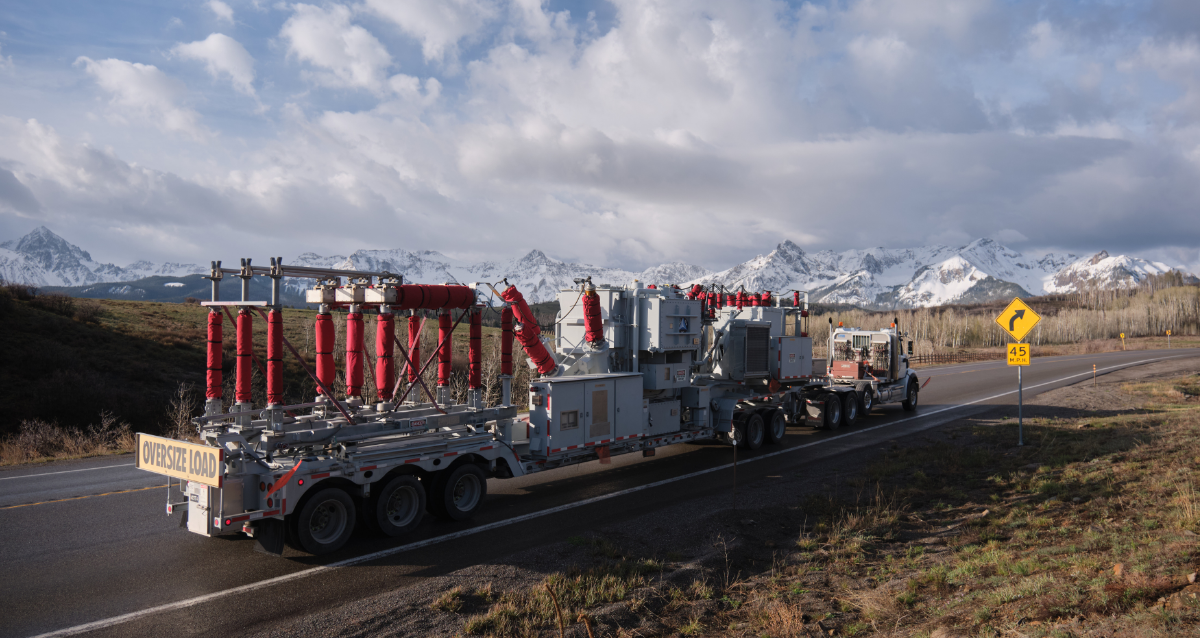
In the summer of 2026, Mobile 27 became that replacement.
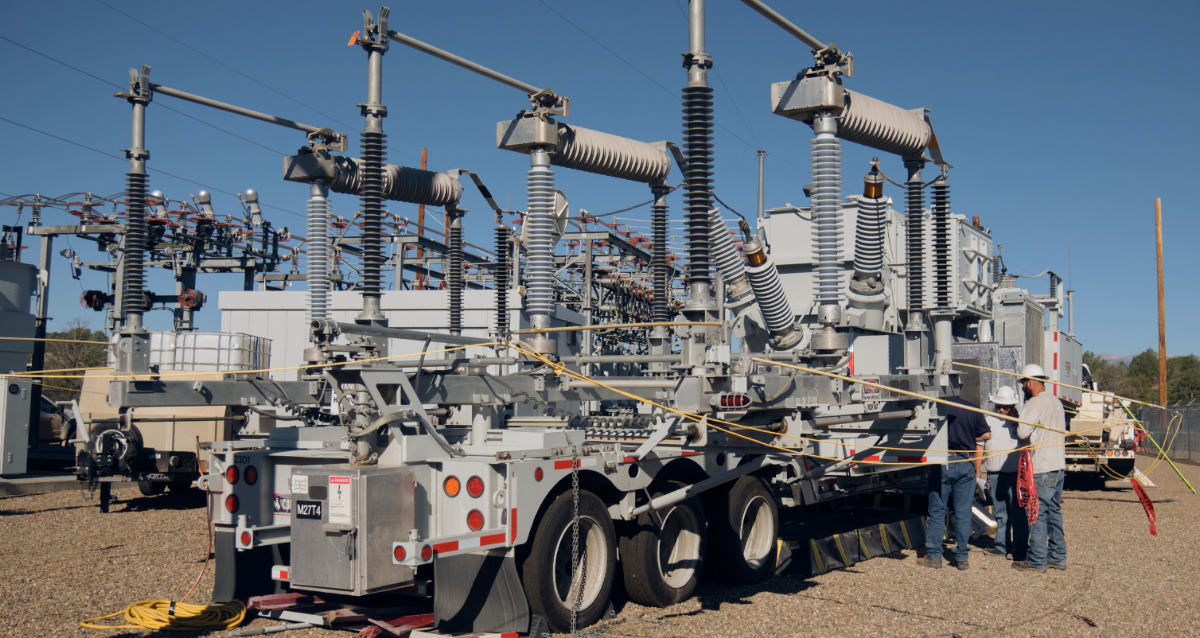
The unit was transported from Montrose, Colorado to the Tercio Substation near Trinidad, where crews from Tri-State and San Isabel Electric Association (SIEA) worked together to place it into service.
"It's not as simple as plugging something in," said Ben Ferrier, substation maintenance manager at Tri-State. "For a lot of this equipment, the only way to take it out of service and perform maintenance is to install a mobile," Ferrier said.
What followed was a carefully orchestrated process involving Tri-State employees across several departments and SIEA crews, all working together to create a temporary path for power while critical maintenance was completed.
Once energized, the transformer will sit overnight before load is transferred the following day, a deliberate process designed to ensure everything is operating as expected. Tri-State's mobile substations range in capacity from 5-40 megavolt-ampere (MVA) with the larger ones having the capacity to power approximately 27,000 homes.
Planning for the days no one wants to experience
The value of a mobile substation becomes most visible when something goes wrong. In February 2023, it became a lifeline for the Colorado town of Lake City after a critical piece of equipment failed during a winter storm and approximately 1,900 residents lost power.
Even as temperatures dropped below zero, crews from Tri-State and Gunnison County Electric Association mobilized. They worked through the night and into the next day to install the mobile substation that was transported across snowy mountain highways under an escort from the Colorado Department of Transportation. After more than 24 consecutive hours of work in challenging conditions, crews restored power safely, demonstrating how preparation, teamwork and specialized resources can make all the difference when communities need them most.
“In this case, and several others, the mobile sub drastically reduced the emergency restoration timeline,” remarks Ferrier. “We restored the power in a matter of hours instead of the weeks or months it would have taken to replace the failed equipment.”
The value of cooperation
This highlights one of the less visible benefits of being part of a generation and transmission cooperative system: that some challenges are too large and too expensive to tackle alone. A mobile substation is just one example.
For an individual utility, investing millions of dollars in equipment that may only be needed occasionally can be difficult to justify. Through the cooperative model, however, member systems have access to specialized resources that can be deployed wherever and whenever they're needed across the region.
Whether responding to an emergency equipment failure, supporting wildfire recovery efforts, or allowing crews to safely perform maintenance, these mobile substations serve as a resource available to all members.
Most days, it sits quietly waiting.
But behind that presence is a promise that has guided cooperative utilities for generations: prepare for the unexpected, share resources wisely, and ensure members have the reliable service they depend on.
Because when the day comes that the safety net is needed, it’s already in place.
--
About Tri-State
Tri-State is a power supply cooperative, operating on a not-for-profit basis, serving electric distribution cooperatives and public power district member-owners in four states. Together with our members, we deliver reliable, affordable and responsible power to nearly a million electricity consumers across roughly 200,000 square miles of the West. Visit www.tristate.coop.
Blog Posts

Protecting Your Home Year-Round from Wildfires

Summer Backpacking: Solar Power, Energy Efficiency, and the Best States to Visit

Beat the Chill: Effective Insulation Strategies for Winter Comfort
Energy Efficient Heating Options for Rural Communities in the West

Boost Your Business with EV Charging
The Benefits of Having Your Own EV Charger at Home
Geothermal Heat Pumps: Harnessing Earth's Energy for Your Business
Mastering Energy Efficiency with These Home Upgrades